SWARM vs Traditional AI Models: How Helektron Is Rethinking AI for Engineering
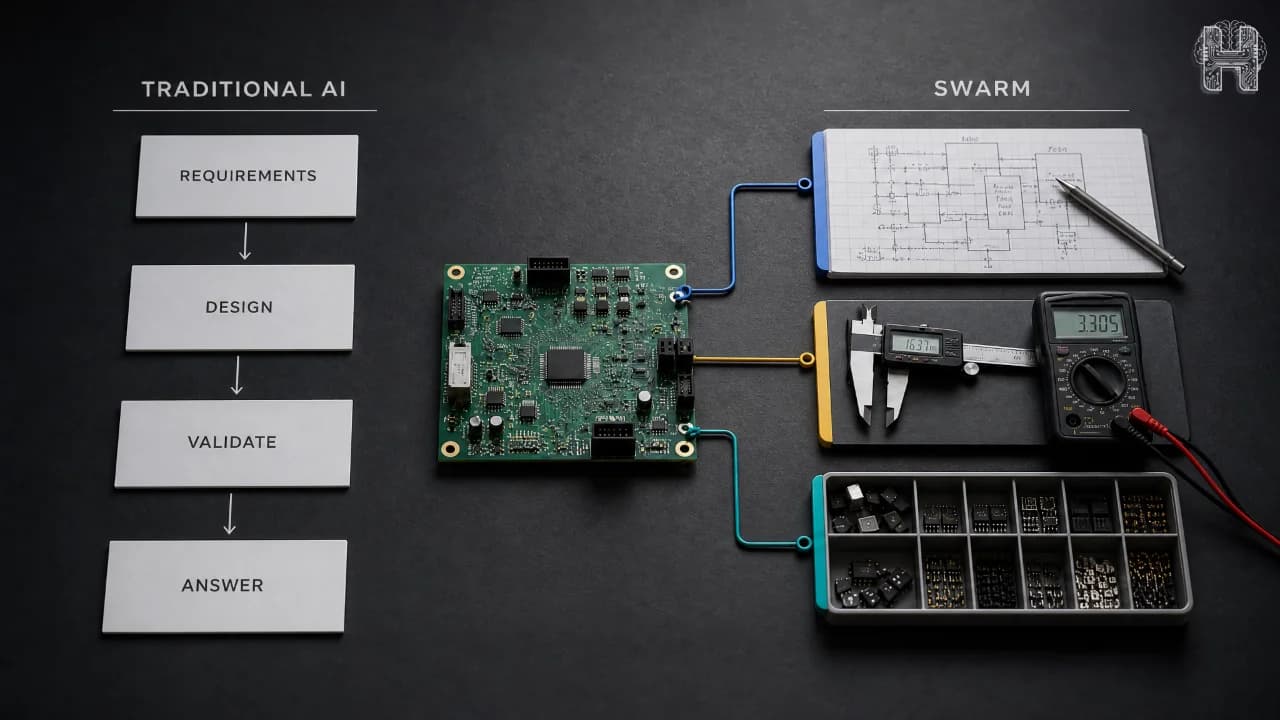
Artificial intelligence is moving beyond simple prompts and responses toward systems that can reason, coordinate, and support complex workflows. For engineers, this shift is particularly important because engineering problems often involve multiple requirements, constraints, decisions, and verification steps. This is where AI models for engineering are becoming increasingly valuable. Among next-generation AI models, Helektron’s SWARM AI takes an engineering-focused approach designed to support more advanced problem-solving and intelligent workflows.
What Are Traditional AI Models?
Traditional AI models are generally designed to perform specific tasks based on the information provided to them. Modern generative AI has expanded these capabilities by producing text, code, images, and other outputs. However, when complex engineering tasks require reasoning across multiple stages, simply generating an answer may not be enough. The difference between AI vs traditional software is also important. Traditional software follows predefined rules and instructions, while modern AI can interpret information, identify patterns, and generate responses. AI reasoning models take this further by focusing on solving more complex problems rather than only generating content.
What's the Difference Between AI Reasoning and Traditional AI?
Most AI models today are built on a generative AI foundation: you give a prompt, the model predicts the next best output, and that's the end of the interaction. This works well for writing or summarizing, but engineering problems debugging a system, designing a circuit, validating a workflow usually need more than a single response. They need reasoning, iteration, and context that persists across steps. This is the core difference between AI reasoning vs generative AI. Reasoning-focused, agentic AI systems don't just generate an answer they plan, evaluate, and refine, much closer to how a human engineer actually works through a problem.
SWARM AI vs Traditional AI: Why It Matters for Engineers
When comparing advanced AI vs traditional AI for real engineering AI tools, three differences stand out:
- Depth of reasoning -SWARM is built around AI reasoning, not just generation, making it better suited to multi-step engineering tasks.
- Specialization -as a multi-agent system, SWARM can assign different aspects of a problem (research, validation, execution) to different agents, rather than forcing one generalist model to handle everything.
- Context retention -traditional AI models often lose context across a long task; agentic AI architectures like SWARM are designed to hold and use context throughout a workflow.
The SWARM AI model represents Helektron’s approach toward more capable and engineering-oriented AI. Instead of viewing AI as only a question-and-answer system, SWARM AI Helektron is positioned around intelligent reasoning and coordinated workflows. The concept behind swarm AI architecture connects with the broader development of multi-agent AI, AI agents, and multi-agent systems, where different intelligent processes can contribute to solving complex tasks. This makes the comparison between AI reasoning vs traditional AI especially relevant for engineering applications. Rather than simply asking which model generates the best response, an AI model comparison 2026 should also consider how effectively a system can reason through complex requirements and support real-world workflows.
How SWARM Brings AI Reasoning to Engineering
Modern AI for engineers needs to go beyond generic assistance. Engineering workflows can involve design requirements, component choices, circuit behavior, verification, and manufacturing considerations. AI for engineering therefore requires a combination of reasoning, contextual understanding, and workflow support. With SWARM AI, Helektron is exploring this direction through AI engineering, AI-powered engineering, and intelligent design workflows. This positions the Helektron AI model within a broader shift from conventional automation toward more adaptive AI systems. The evolution from generative AI vs agentic AI also highlights this change. Generative AI primarily creates outputs, while agentic AI can be designed to pursue tasks through multiple steps. Similarly, single agent vs multi-agent AI approaches demonstrate how coordinated AI processes can address more complex objectives.
How Helektron Is Rethinking AI for Engineering Design
Helektron SWARM AI is part of Helektron’s broader vision for applying advanced AI models to engineering. The goal is to make sophisticated engineering AI tools more useful across electronics and hardware workflows. For electronics professionals, students, makers, and engineering teams, this creates opportunities for AI for electronics design, including intelligent circuit and PCB-related workflows. Instead of treating AI as a standalone chatbot, Helektron is building toward an ecosystem where AI can participate more meaningfully in the engineering process.
SWARM the Future of AI-Powered Engineering
The evolution from traditional AI vs new AI models is changing how organizations think about engineering software. Advanced AI systems are increasingly moving toward reasoning, coordination, and task-oriented workflows. While tools such as ChatGPT, Claude, and Gemini serve broad AI use cases, specialized systems can take a different approach by focusing on specific industries and workflows. In this context, searches such as ChatGPT alternative, Claude alternative, and Gemini alternative increasingly include solutions designed for specialized professional needs. As advanced AI models, agentic AI, and multi-agent AI continue evolving, SWARM represents Helektron’s vision for engineering-focused intelligence. The future of AI in engineering will not simply be about generating answers it will be about helping engineers solve increasingly complex problems with intelligent, coordinated, and practical AI systems. For further Details contact Team Helektron at +91 87965 06854 Read about- SWARM: Helektron’s Next-Generation AI Model Helektron recent launched model Or visit website Helektron.ai