The Quiet Brain Behind Every Device: What Are PCBs Used For?
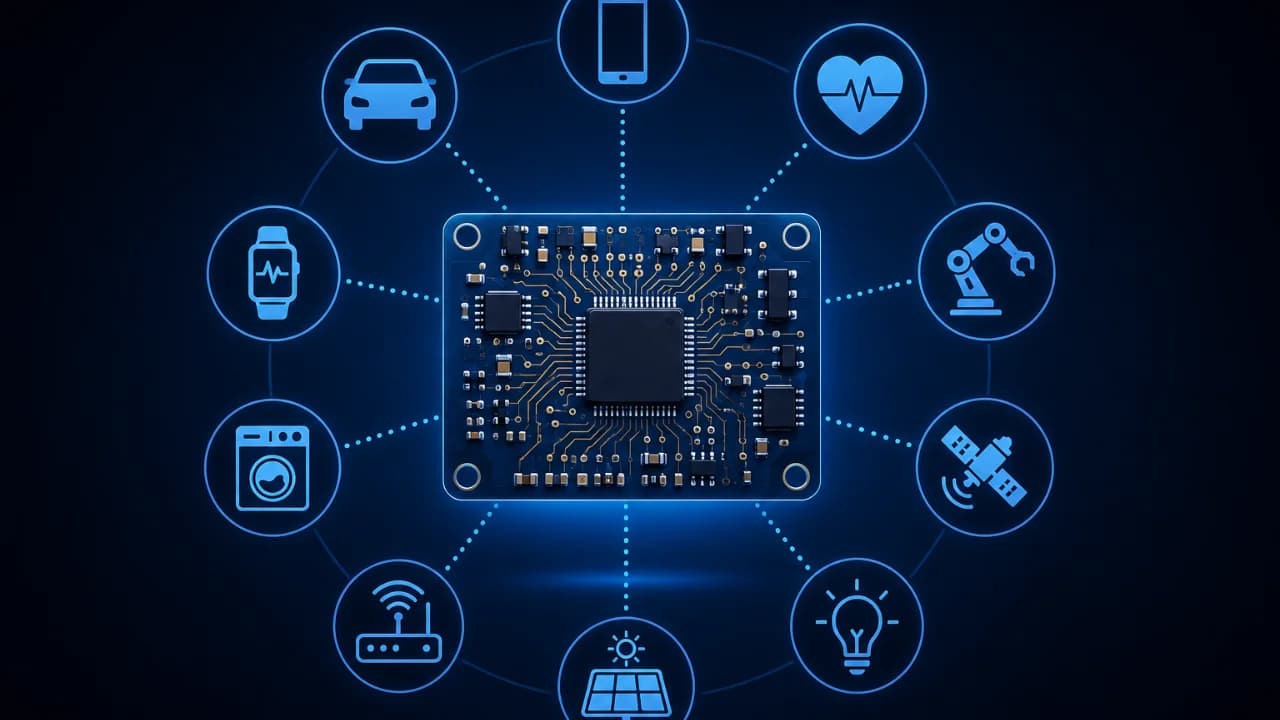
From the smartphone in your hand to the electric vehicle on the road, printed circuit boards (PCBs) quietly power the technology we rely on every day. This blog explores the essential role of PCBs across industries, the different types of boards engineered for specialized applications, and the journey from schematic design to final assembly. It also highlights how Helektron helps engineers and manufacturers source the right components, ensuring reliable, high-performance electronic products from prototype to production.
Every time you tap your phone screen, start your car, or flick on a light switch, something remarkable happens beneath the surface. Invisible to most, a precisely engineered printed circuit board springs into action — routing electricity, firing signals, and making your device do exactly what you asked. PCBs are everywhere, yet almost nobody thinks about them. That's about to change. Where PCBs Show Up in Everyday Life Consumer electronics — Smartphones, laptops, smart TVs, gaming consoles, cameras, and wearables all run on PCBs. The most densely packed boards in existence live right in your pocket. Medical devices — Pacemakers, MRI machines, infusion pumps, glucose monitors, and defibrillators depend on PCBs. Medical-grade boards demand extraordinary reliability — lives literally depend on them. Automotive systems — Engine control units, ABS, infotainment systems, ADAS sensors, and EV battery management all rely on PCBs. A modern vehicle can contain over 100 of them. Industrial automation — PLCs, CNC controllers, motor drivers, and robotics use ruggedised PCBs built to handle heat, vibration, and continuous operation. Aerospace and defence — Avionics, guidance systems, radar, satellites, and drones use PCBs made from exotic materials designed to survive extreme environments. LED lighting — Smart bulbs, architectural lighting, signage, and street lights use metal core PCBs that efficiently manage the high heat output of LEDs. Renewable energy — Solar inverters, wind turbine controllers, EV chargers, and smart grid equipment all depend on high-power PCB assemblies. Telecommunications — Routers, base stations, fibre-optic transceivers, and data centre switches are built around high-frequency PCBs that form the backbone of 5G infrastructure. Home appliances — Washing machines, air conditioners, microwaves, and refrigerators all contain control boards managing timing, sensing, and safety. Not All Boards Are Built the Same The application dictates the board type. Single-layer PCBs are cost-effective for simple power supplies and sensor circuits. Double-sided boards allow more complex routing for consumer products. Multilayer PCBs — stacking four to twenty or more layers — are used in smartphones, servers, and aerospace systems where density and signal integrity demand extreme precision. Flexible PCBs bend and fold, enabling the slim profiles of modern wearables, hearing aids, and cameras. Rigid-flex designs combine stable mounting zones with flexible interconnects in a single board — the go-to architecture for aerospace and implantable medical devices. High-frequency PCBs use specialty laminates like Rogers or PTFE to handle microwave and RF signals with minimal loss, critical for 5G antennas and radar. Spotlight: Helektron Whether you're designing a single-layer control board for a home appliance or a high-density multilayer assembly for medical or aerospace use, Helektron brings the components, expertise, and sourcing capabilities to meet you at every stage of the product lifecycle. Helektron's catalogue spans passive components, microcontrollers, power management ICs, connectors, and speciality materials — everything a design engineer needs from schematic to final assembly. Their team understands that the right component at the right spec is the difference between a board that ships and one that fails qualification. From rapid prototyping of IoT sensors to bulk procurement for automotive-grade assemblies, Helektron ensures continuity of supply, competitive pricing, and technical support that keeps your production line moving. How a PCB Comes to Life Every PCB begins with a schematic, moves into PCB layout software where copper traces are routed, then heads to a fabrication house for etching, drilling, plating, and silkscreening. After bare board testing, components are placed by pick-and-place machines and soldered through reflow or wave soldering. Final boards go through automated optical inspection, X-ray inspection, and in-circuit testing before reaching the customer. At each stage, component selection matters enormously. Choosing the wrong capacitor dielectric for a switching power supply, or specifying a connector without the correct vibration rating for an automotive application, causes failures that are expensive to diagnose. This is why partnering with a knowledgeable distributor like Helektron — one that carries the full spectrum of qualified components and understands application-specific requirements — pays dividends long before a board goes into fabrication. The Future Is Smaller, Faster, Greener The PCB industry is evolving rapidly. Embedded components, advanced packaging like system-in-package (SiP), and chiplets are pushing integration further. Halogen-free and lead-free materials are becoming the norm as environmental regulations tighten globally. AI is entering both PCB design and manufacturing through automated routing, DFM analysis, and predictive defect detection. For engineers and procurement teams navigating this landscape, having a reliable supply partner who tracks these shifts in real time is invaluable. Helektron stays ahead of component transitions — from legacy through-hole parts to the latest system-on-module solutions — so your designs never stall waiting on obsolete stock. Bottom line: Printed circuit boards are not just a component category — they are the foundational technology that makes every electronic product possible. From the alarm clock on your nightstand to the satellites mapping climate change, PCBs are doing quiet, essential work. And behind the boards that power your next product, Helektron is ready to help you source, spec, and succeed.