AI Circuit Simulation: Can AI Predict Circuit Behavior Before PCB Manufacturing?
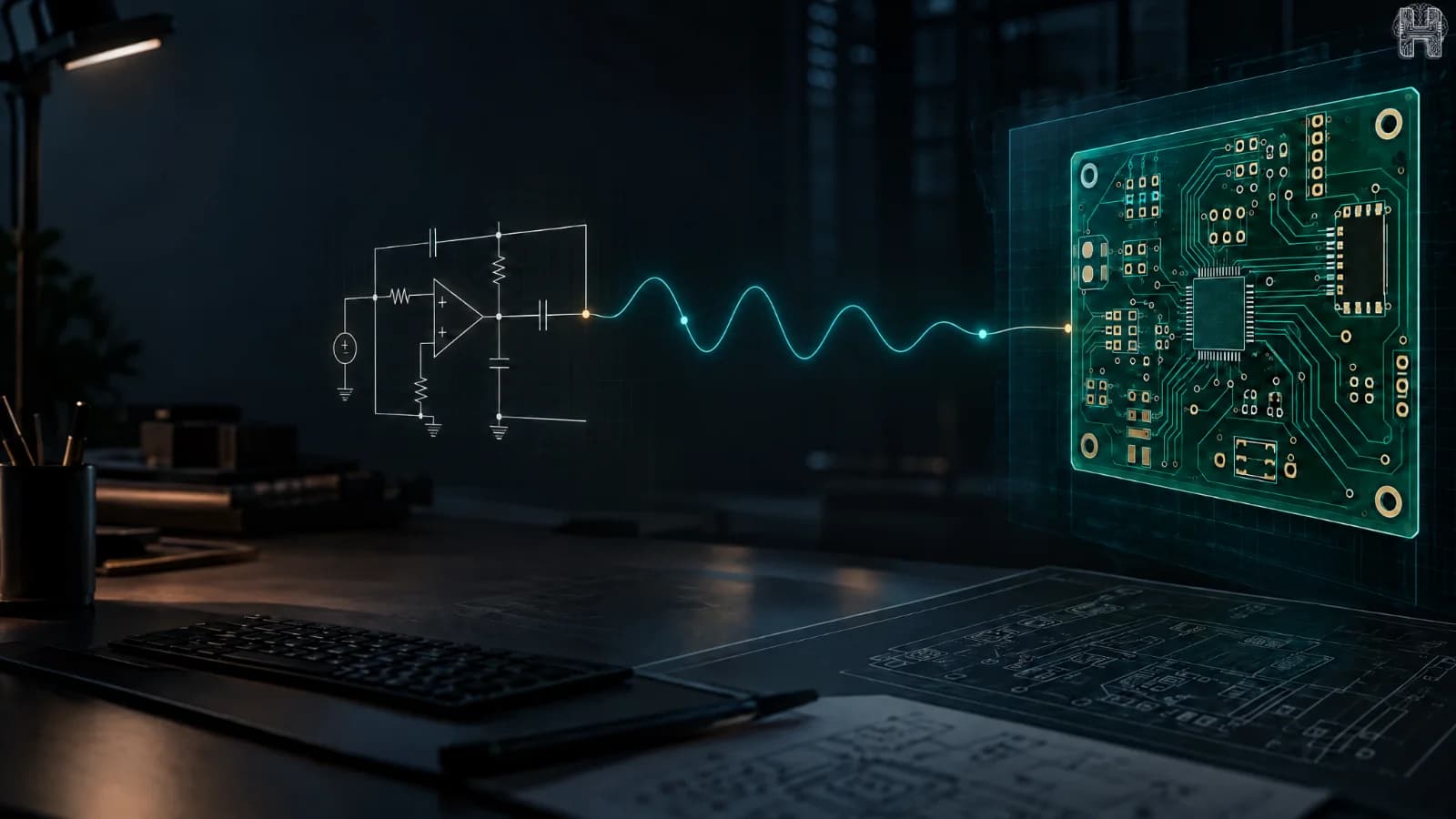
Circuit design involves more than connecting electronic components. Engineers must understand how voltage, current, resistance, and other parameters affect circuit performance before moving to PCB manufacturing. This is where AI circuit simulation and machine learning are creating new opportunities in electronics engineering.
With advancements in AI in electronics design, engineers can use intelligent tools to simplify circuit development, analyze design requirements, and identify potential issues earlier. Helektron brings AI into circuit and PCB design through a browser-based platform that helps users turn their ideas into electronic designs without downloading traditional desktop software.
What Is AI Circuit Simulation?
AI circuit simulation refers to using artificial intelligence and machine learning techniques to analyze, estimate, or predict how an electronic circuit may behave under specified conditions.
Traditional circuit simulation software uses mathematical models and component characteristics to calculate circuit responses. In contrast, machine learning circuit simulation can use trained models and previously generated data to estimate circuit behavior or accelerate specific analysis tasks.
AI-powered approaches can support:
- Estimating voltage and current behavior.
- Identifying unusual circuit responses.
- Analyzing component interactions.
- Exploring design alternatives.
- Supporting early-stage circuit validation.
Can AI Predict Circuit Behavior Before PCB Manufacturing?
Yes, AI can help predict aspects of circuit behavior before PCB manufacturing, provided it has suitable design information, reliable component models, and relevant training or simulation data.
For example, when designing a voltage regulator, engineers need to consider input voltage, output voltage, current requirements, and component ratings. AI-assisted analysis can help explore these requirements and highlight potential design concerns.
However, circuit behavior prediction is not a replacement for accurate electrical simulation, physical testing, or hardware validation. Its reliability depends on the models, assumptions, and data used.
How Does an AI Circuit Simulator Work?
An AI circuit simulator can combine machine learning techniques with traditional engineering methods to analyze electronic designs.
A typical workflow involves:
- Design input: The user provides circuit requirements, component information, or a schematic.
- Circuit analysis: The system examines component relationships and electrical parameters.
- Prediction: Trained models estimate selected circuit responses or identify potential concerns.
- Validation: Engineers compare predictions with established simulation methods and test results.
This combination of AI for EDA (Electronic Design Automation) and conventional analysis can make electronics development more efficient.
Can You Test a PCB Before Manufacturing?
Yes. Engineers can use PCB simulation software, electrical simulation, schematic checks, and design verification methods to identify potential problems before fabrication.
Pre-layout simulation PCB workflows help evaluate circuit behavior before physical board layout. After layout, additional checks are necessary to assess electrical connections, routing, and manufacturing requirements.
An online circuit simulator or circuit analysis software can support different stages of this process, depending on its capabilities.
How Helektron.ai Simplifies AI-Powered Circuit Design
Helektron.ai is a browser-based AI circuit design tool that brings artificial intelligence into schematic and PCB design workflows.
Instead of relying entirely on traditional manual design processes, users can describe their circuit requirements and work toward an electronic design with AI assistance.
Key advantages include:
- AI-assisted circuit design: Helps users move from a written idea toward an electronic schematic.
- Simplified PCB workflows: Supports the transition from circuit concepts toward PCB design.
- Browser-based accessibility: Users can work without downloading conventional desktop EDA software.
- Beginner-friendly experience: Makes AI-powered circuit design more approachable for students, hobbyists, and engineers.
Whether you are exploring an idea or developing a more advanced electronic project, Helektron.ai helps make circuit and PCB design more accessible.
For further details contact Team Helektron at +91 87965 06854
Read- Text to Schematic: How AI Turns a Sentence into a Verified PCB Design in 2026
Create you circuit now by clicking directly on- chat.helektron.ai
Visit website- Helektron.ai
Frequently asked questions
Can AI simulate electronic circuits?
Yes. AI can assist with circuit analysis and selected simulation tasks, often alongside traditional mathematical models and simulation tools.
How accurate is AI circuit simulation?
Accuracy depends on training data, component models, circuit complexity, and validation methods. AI predictions should be checked against established simulation and testing.
Can AI detect errors in electronic circuits?
AI can help identify potential design issues, but engineers should use appropriate electrical rule checks, simulation, and hardware testing for reliable verification.